

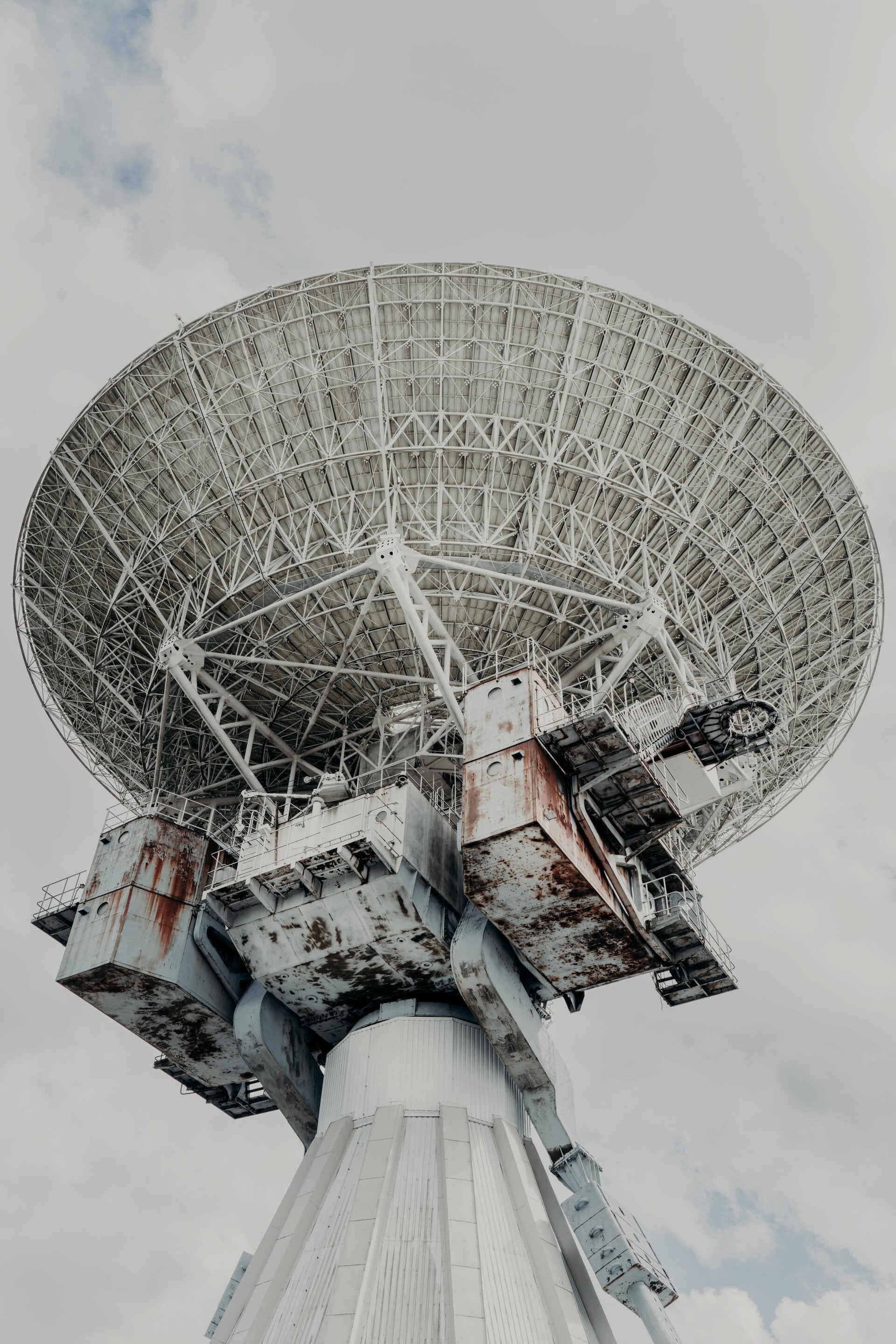
The Microwave Auditory Effect & Havana Syndrome
Independent research examining the microwave auditory effect, pulsed radiofrequency phenomena and their potential relevance to Havana Syndrome. The research brings together established science, documented experimental capabilities, technical modelling and original hypotheses while clearly separating demonstrated evidence from speculation.
Core Areas of Research
The research examines the microwave auditory effect and Havana Syndrome through several connected lines of investigation: established radiofrequency-induced auditory phenomena, documented experimental capabilities, medical and scientific evidence, RF technology and technical feasibility, computational modelling, and hypothesis-driven analysis.
The aim is to determine what has been experimentally demonstrated, what is technically plausible, what remains uncertain, and where new modelling or research may help test competing explanations.

The Microwave Auditory Effect
Explore the established science and history of the microwave auditory effect, including its physical mechanism, eight decades of research, the US–Soviet/Russian connection, the science of perception, and experimental demonstrations of encoded signals and speech.
Explore the MAE research

Havana Syndrome & Anomalous Health Incidents
Examine the reported incidents known as Havana Syndrome, including the experiences and symptoms reported by affected personnel, medical and scientific findings, government and intelligence investigations, and the evidence surrounding competing explanations — including hypotheses involving pulsed radiofrequency energy.

Health Effects & Medical Evidence
Examine the medical evidence surrounding Havana Syndrome, including reported neurological, vestibular and cognitive symptoms, clinical assessments and neuroimaging research. Explore what studies have identified, where findings remain contested, and what the available evidence can — and cannot — establish about possible mechanisms or causes.

RF Technology & Technical Feasibility
Examine the technologies and physical principles relevant to proposed radiofrequency explanations of Havana Syndrome, including pulsed RF transmission, antennas, propagation, directionality and power requirements. Explore the practical constraints that determine technical feasibility and the parameters that can be investigated through computational modelling.

RF Sensing & Digital Twins
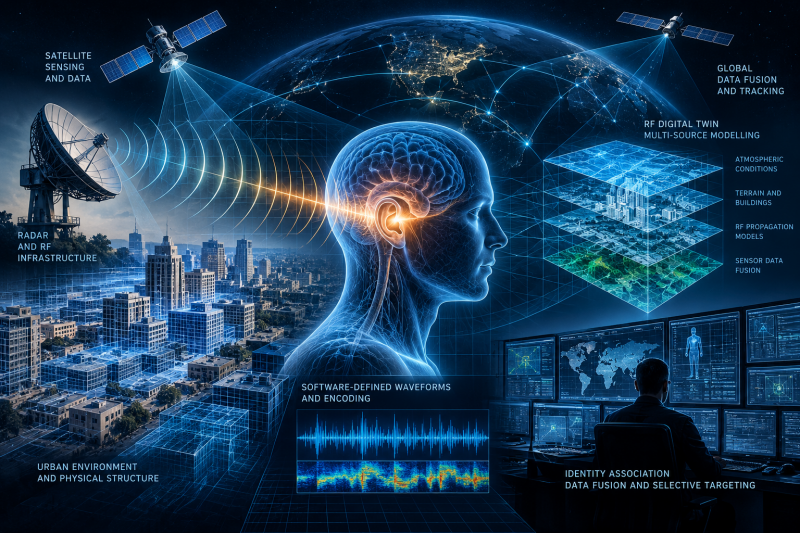
Explore original research into whether radiofrequency signals already present in modern environments could contribute to continuously updated digital representations of the physical world.
The research examines distributed RF sensing, multi-band measurements, propagation modelling and computational reconstruction, while considering the physical limits imposed by wavelength, bandwidth, geometry, noise and incomplete observations.
A Technology-Focused Hypothesis
Explore an original hypothesis examining whether experimentally established microwave-auditory phenomena could, in principle, be integrated with modern RF engineering, sensor fusion, automated tracking, digital-twin modelling and software-defined systems.
The research distinguishes established scientific and technological capabilities from proposed integrations and speculative extensions. It does not claim that the complete system has been demonstrated to exist or that it caused Havana Syndrome.
About the research
Martin Broughton — Research & Analysis is an independent research project focused on the microwave auditory effect and its potential relevance to Havana Syndrome. The research brings together historical experiments, peer-reviewed scientific literature, medical studies, government and intelligence assessments, technical analysis and original research.
Particular emphasis is placed on separating what has been experimentally demonstrated from what remains hypothetical. The microwave auditory effect itself is established, and experiments have demonstrated encoded communication including Morse code and limited speech under controlled conditions. Whether related radiofrequency phenomena explain any cases of Havana Syndrome remains unresolved.
The aim is not to begin with a predetermined explanation, but to examine the available evidence, identify what current science can establish, and explore where important questions remain unanswered.
From Established Science to an Unresolved Mystery
The microwave auditory effect provides an unusual starting point: a phenomenon once considered extraordinary but now supported by decades of experimental research. Pulsed radiofrequency energy can produce auditory sensations without conventional acoustic sound, while controlled experiments have also demonstrated encoded signals, including Morse code and limited speech.
Havana Syndrome presents a different and unresolved question. Radiofrequency mechanisms have been proposed as one possible explanation for some reported incidents, but no such mechanism has been established as the cause.
This research explores the gap between those two positions. Alongside established experimental evidence, it examines technical feasibility, historical research and emerging analytical approaches — including computational modelling of radiofrequency interaction with the human head and inner ear — to investigate what might be physically possible.
Where the evidence ends, hypotheses are treated as hypotheses. The aim is not to prove a predetermined explanation, but to identify testable questions, examine competing possibilities and determine what evidence would be needed to move an idea from plausible hypothesis to demonstrated mechanism.
Explore the research archive

Browse the research archive covering the microwave auditory effect, Havana Syndrome and the scientific and technical questions connecting them. It brings together evidence reviews, historical experiments, peer-reviewed research, government assessments, technical analyses, computational modelling, books and original working hypotheses.
Get in touch
For research enquiries, source suggestions, technical discussion or correspondence relating to the microwave auditory effect, Havana Syndrome and associated research, please use the form below.
Correspondence
🇬🇧 United Kingdom
Research enquiries, corrections, source submissions and collaboration enquiries are welcome.